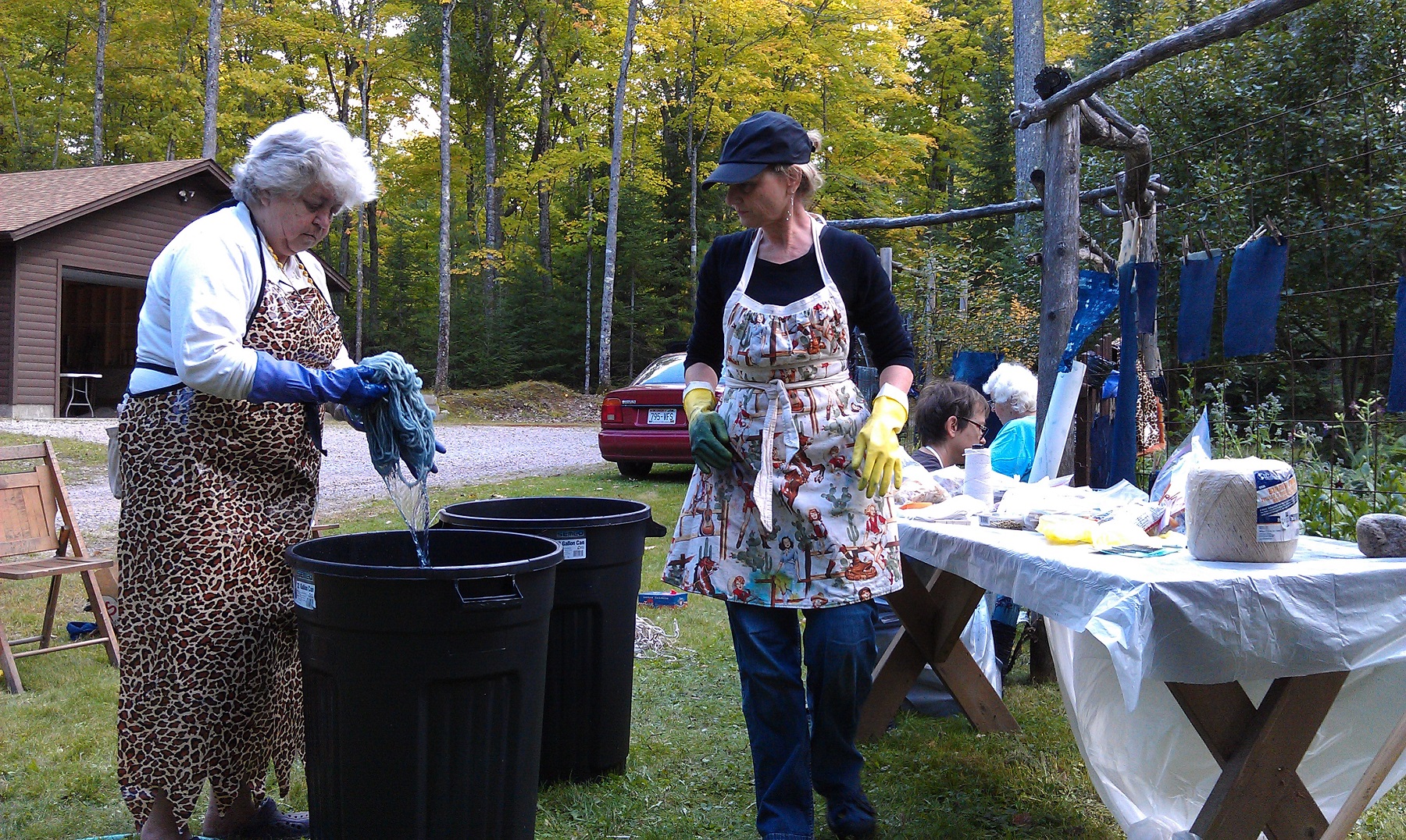
Deb Ketchum-Jircik and Mary Hark, at Circle of Life Studio.
Last weekend I was at a basic indigo and shibori workshop. Taught by Mary Hark, a professor in design studies at UW-Madison, WI, she is also a paper artist and proprietor of Hark! Handmade Paper Studio, also in Madison (http://maryhark.com). The workshop was held at Debra Ketchum-Jircik’s Circle of Life Studio outside Eagle River, WI (http://circleoflifestudio.com).
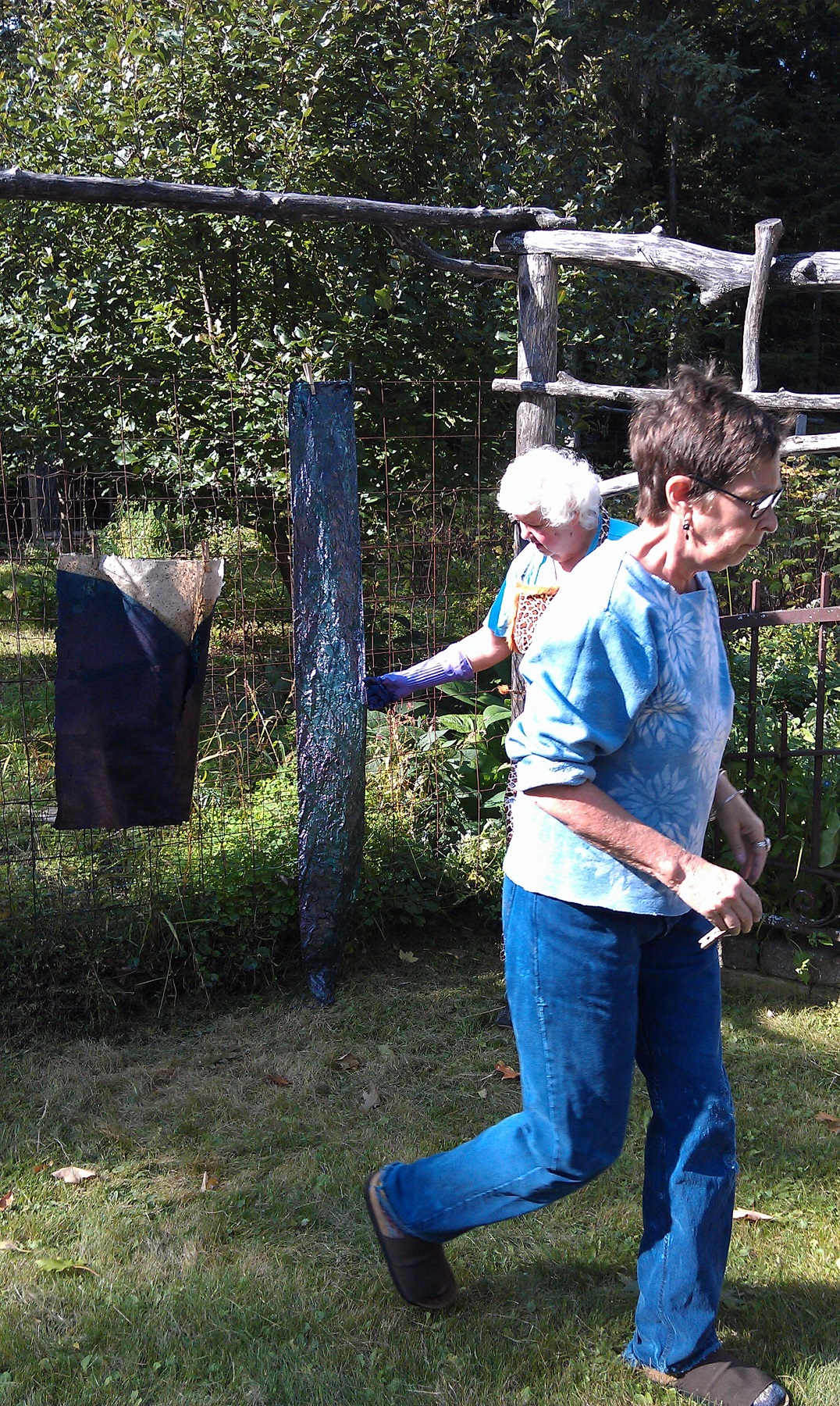
Mary Hark (foreground) and artist Louise Engelbrecht (background).
There were five people participating in the workshop including Louise Engelbrecht, artist/painter/weaver; her friend Eugenie, a felter; Ann, a batik artist; Tim, a new UW-Stevens Point graduate and paper maker; and myself (weaver).
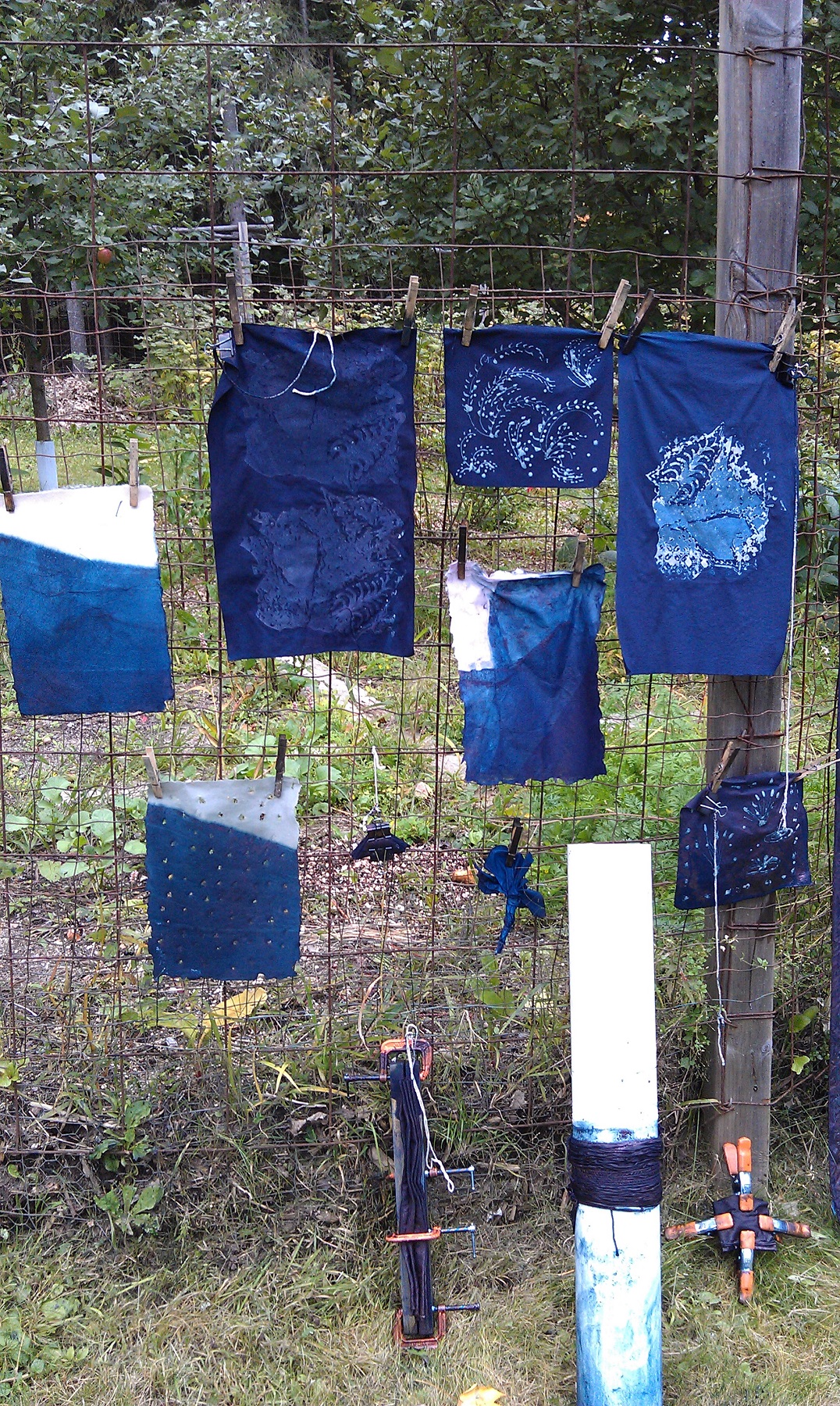
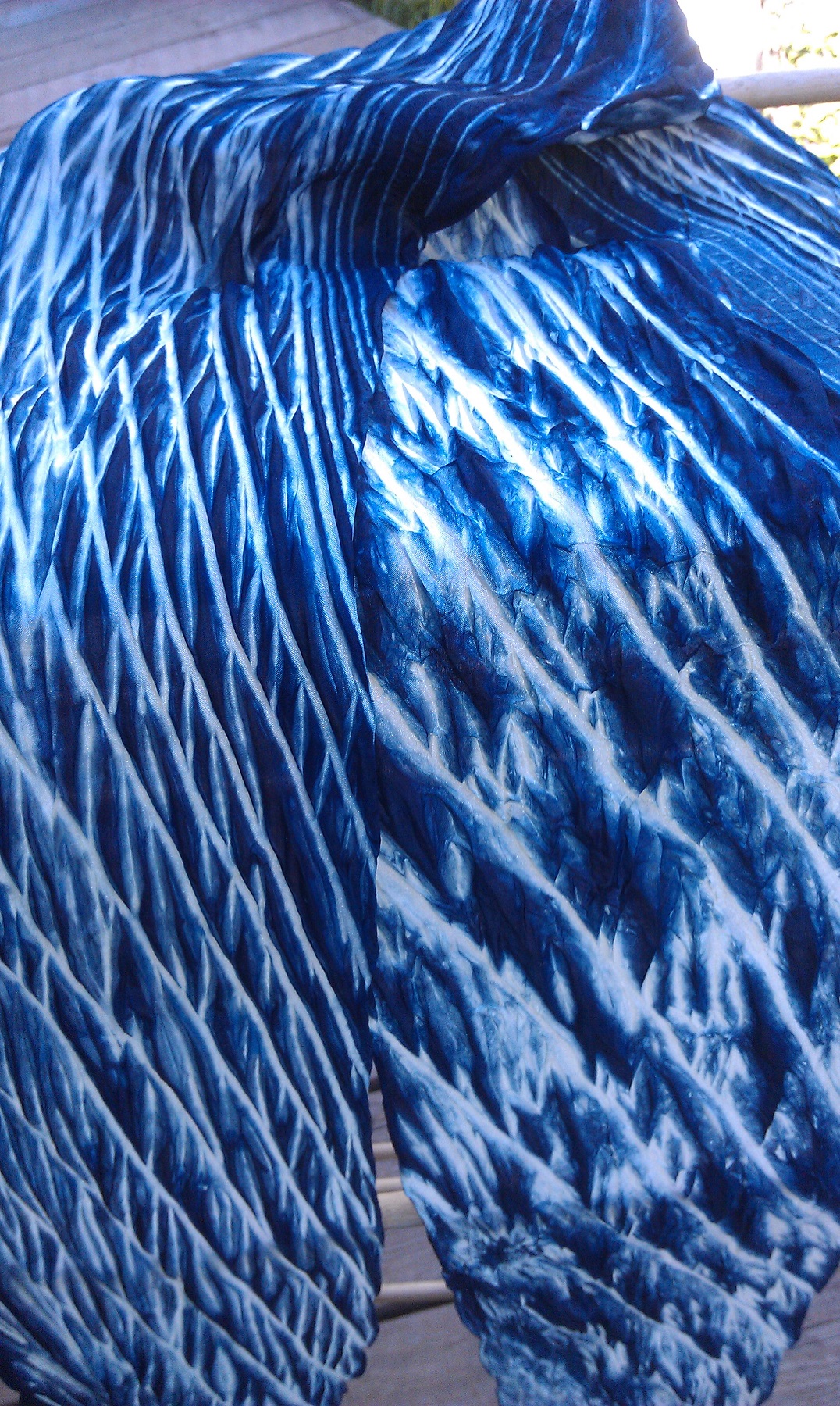
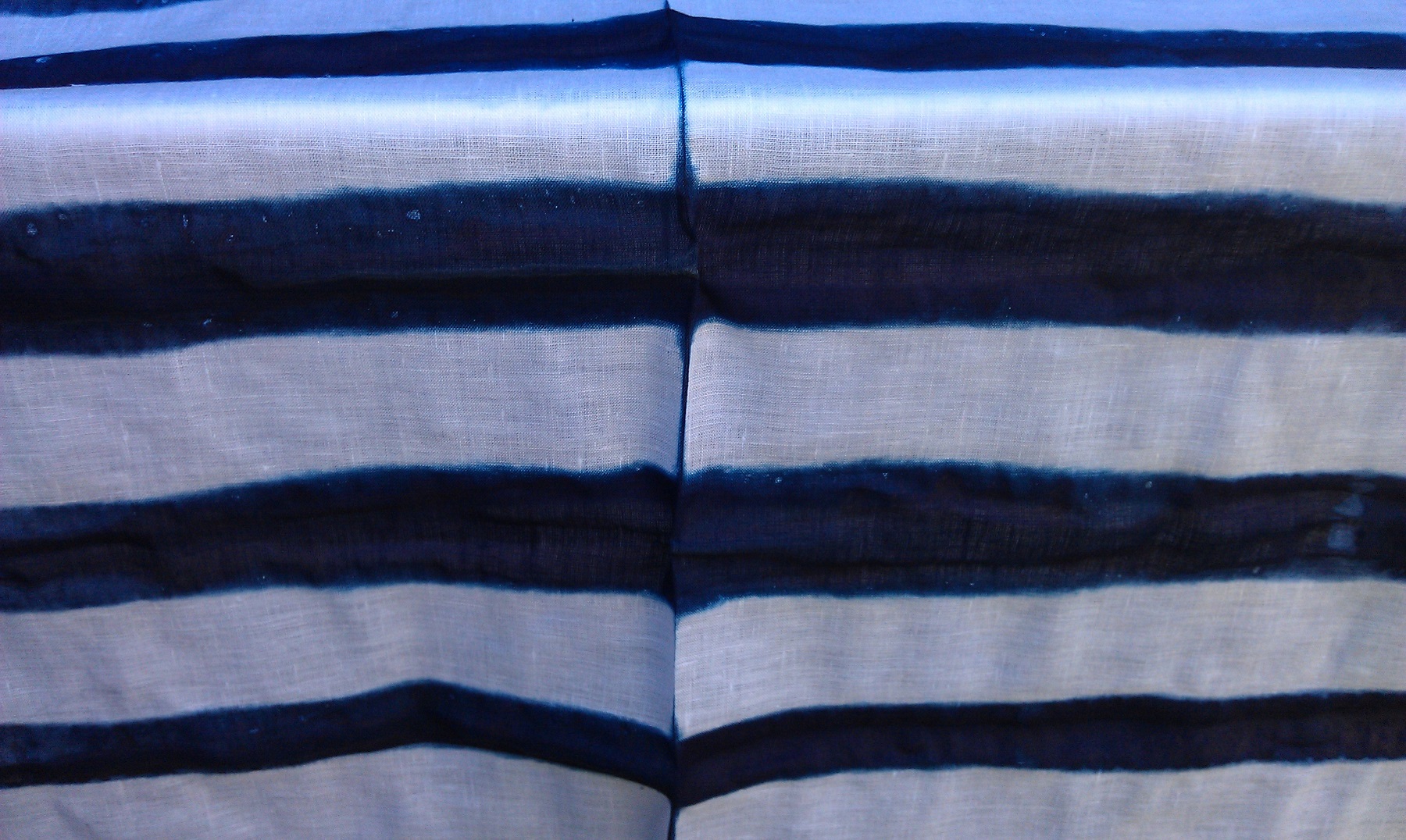
Deb and Tim.Indigo vat with arashi shibori.L to R, Eugenie, Ann, Deb. and Louise.My samples drying at the fence.Arashi shibori silk scarf.Linen, that was folded and clamped between pieces of wood.Cotton that was folded and clamped with pinch clamps.Examples of shibori, many from Ghana.
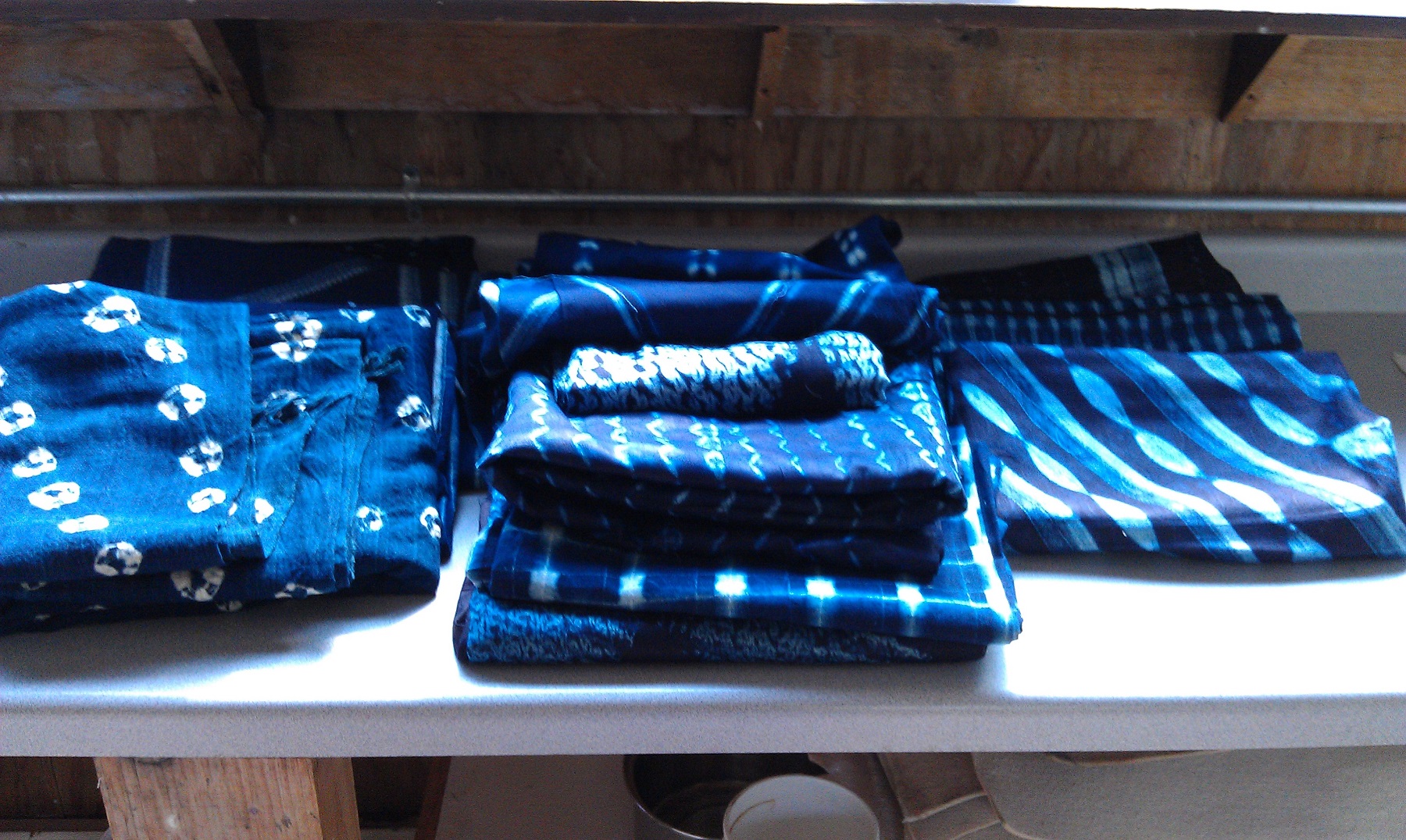
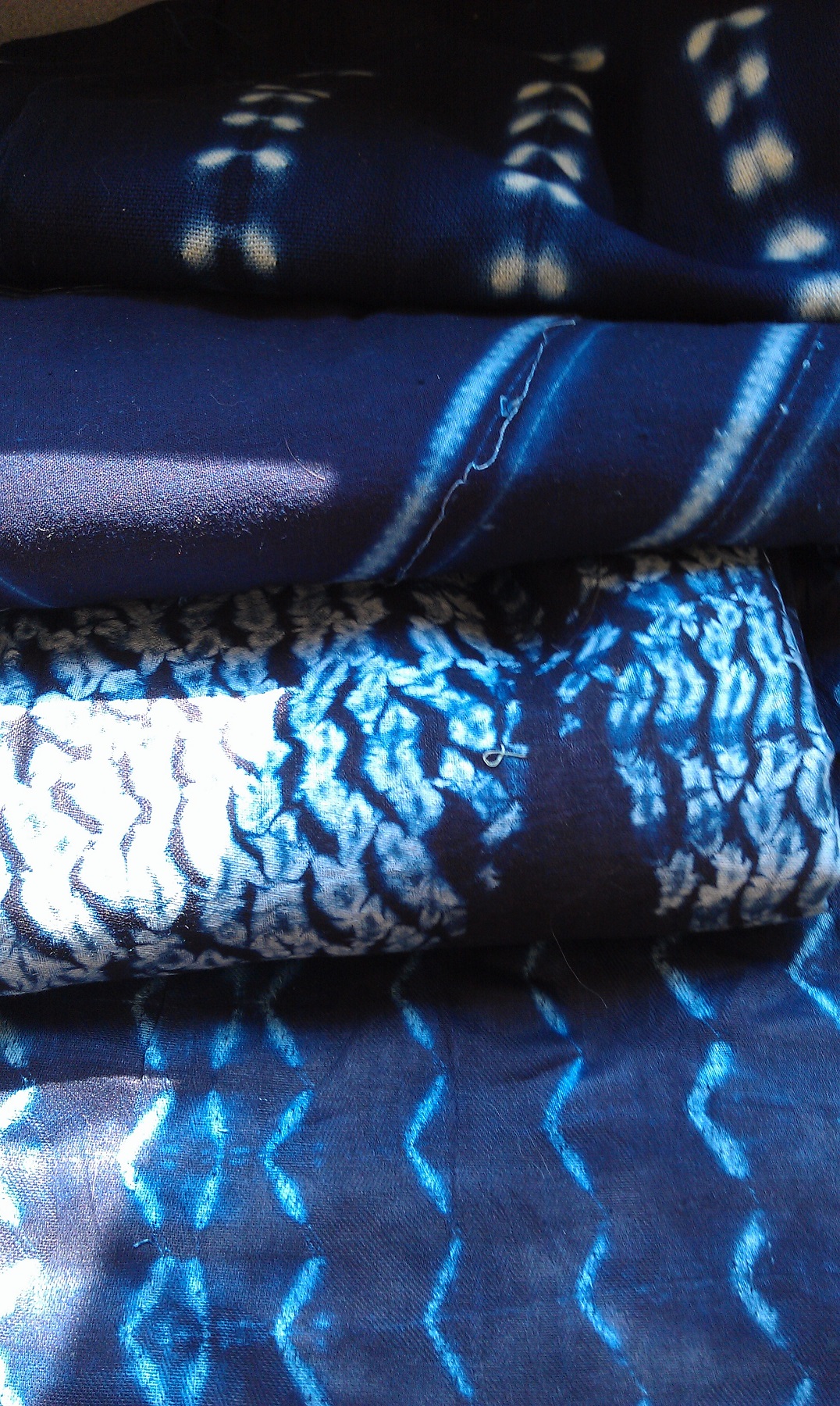
Mary Hark shared with us about her travels and living in Ghana and her work there. The photo above and the next two are examples of shibori she brought with her most (or all) from Ghana.
Shibori from Ghana.More shibori from Ghana.
The workshop ended with a powerpoint presentation of Mary Hark’s experiences in Ghana as well as her beautiful handmade paper art. She may return next summer for another workshop.
The weather cooperated on Saturday and we had a beautiful day to work outside, exploring a few basic forms of shibori and indigo dyeing. A nice workshop and a wonderful group of artists!
There is activity going on in the studio, and it is not weaving! The floors have been badly in need of refinishing, improved lighting has also long been needed, and a couple other changes are also being made. It is exciting to, at long last, see improvements being made!
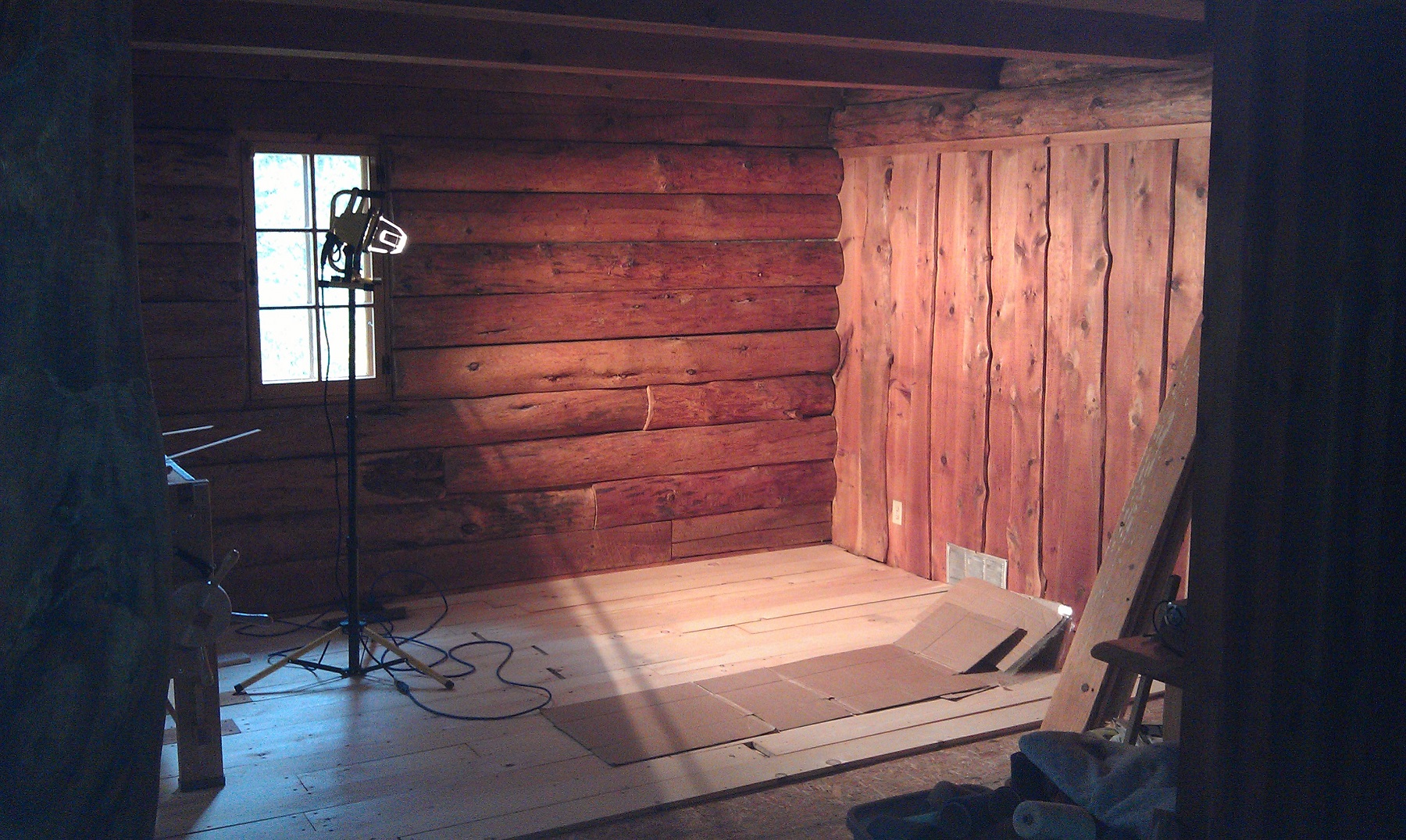
Rough board wall was removed.
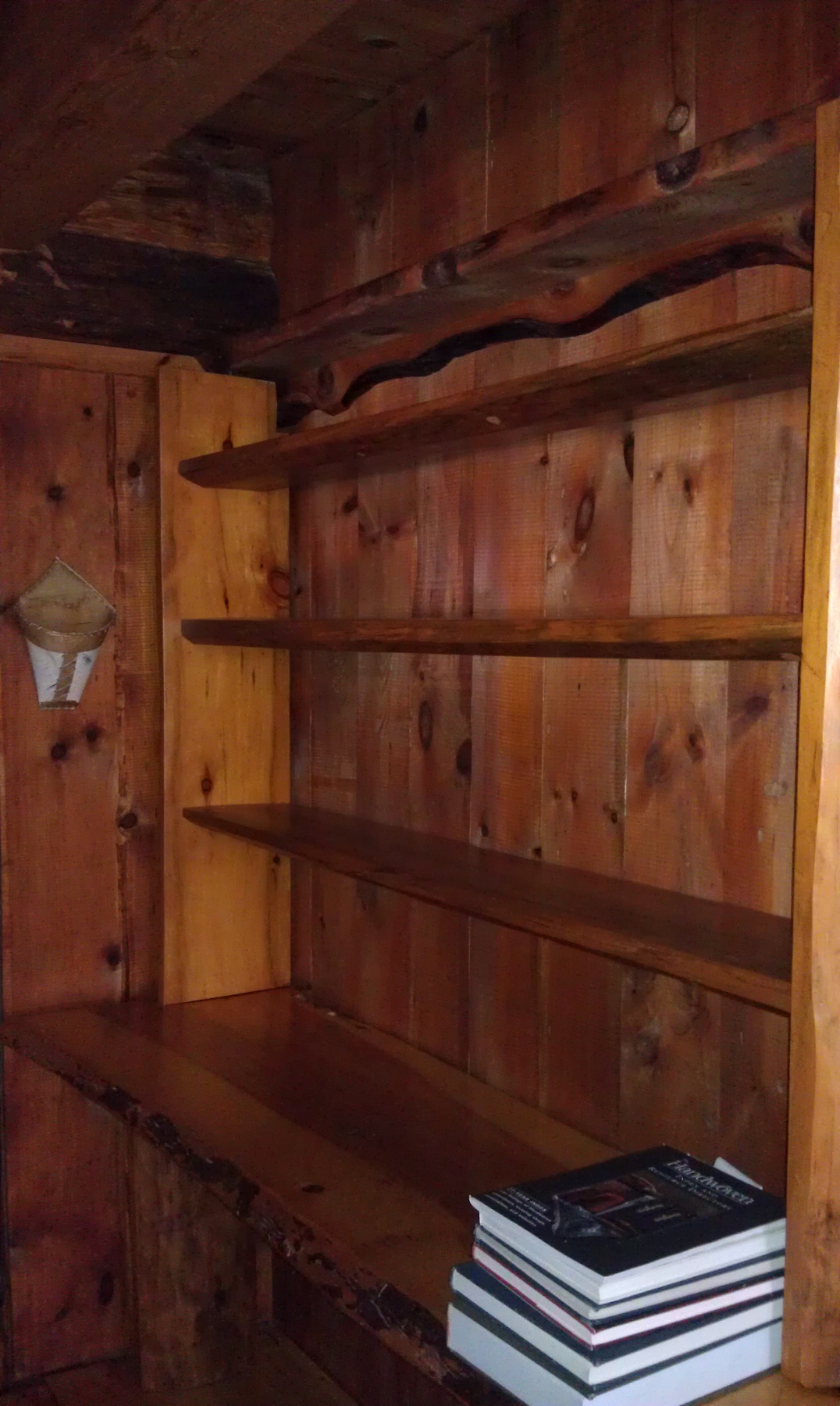
Behind this bookcase was a “wall” made of several rough-sawn boards, put up by the previous owner to keep his children from climbing up onto the bookcase and falling down to the basement floor (basement stairs go down there).
New “half wall” was built.
In its place a “half wall” was built which happily has made the studio feel more open. Light switches were put in this wall as well as an electric outlet on each end. The bookcase will be relocated elsewhere in the room. An added advantage is more warmth from the woodrange will reach into the studio.
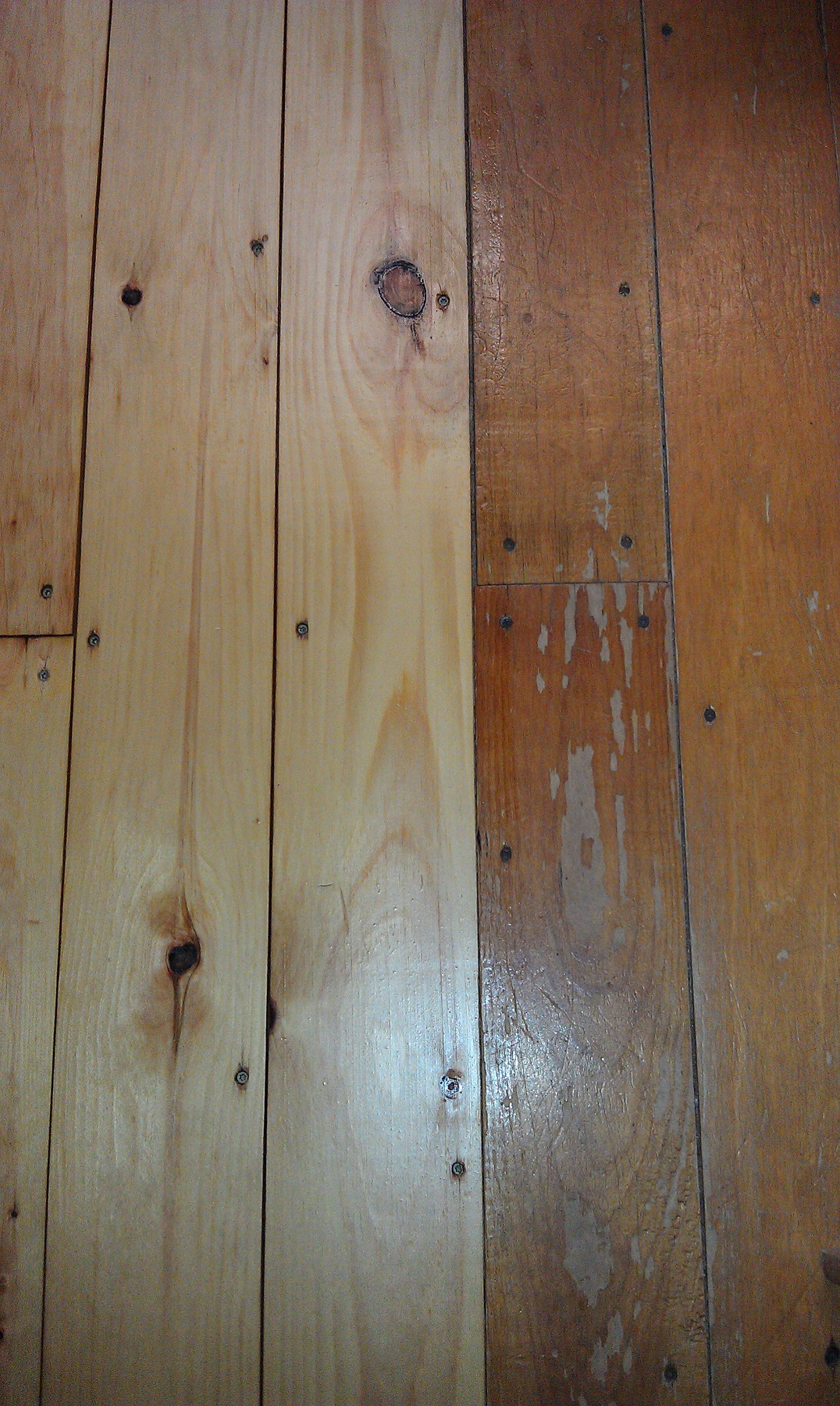
Old floor (right) and newly refinished floor boards (left).
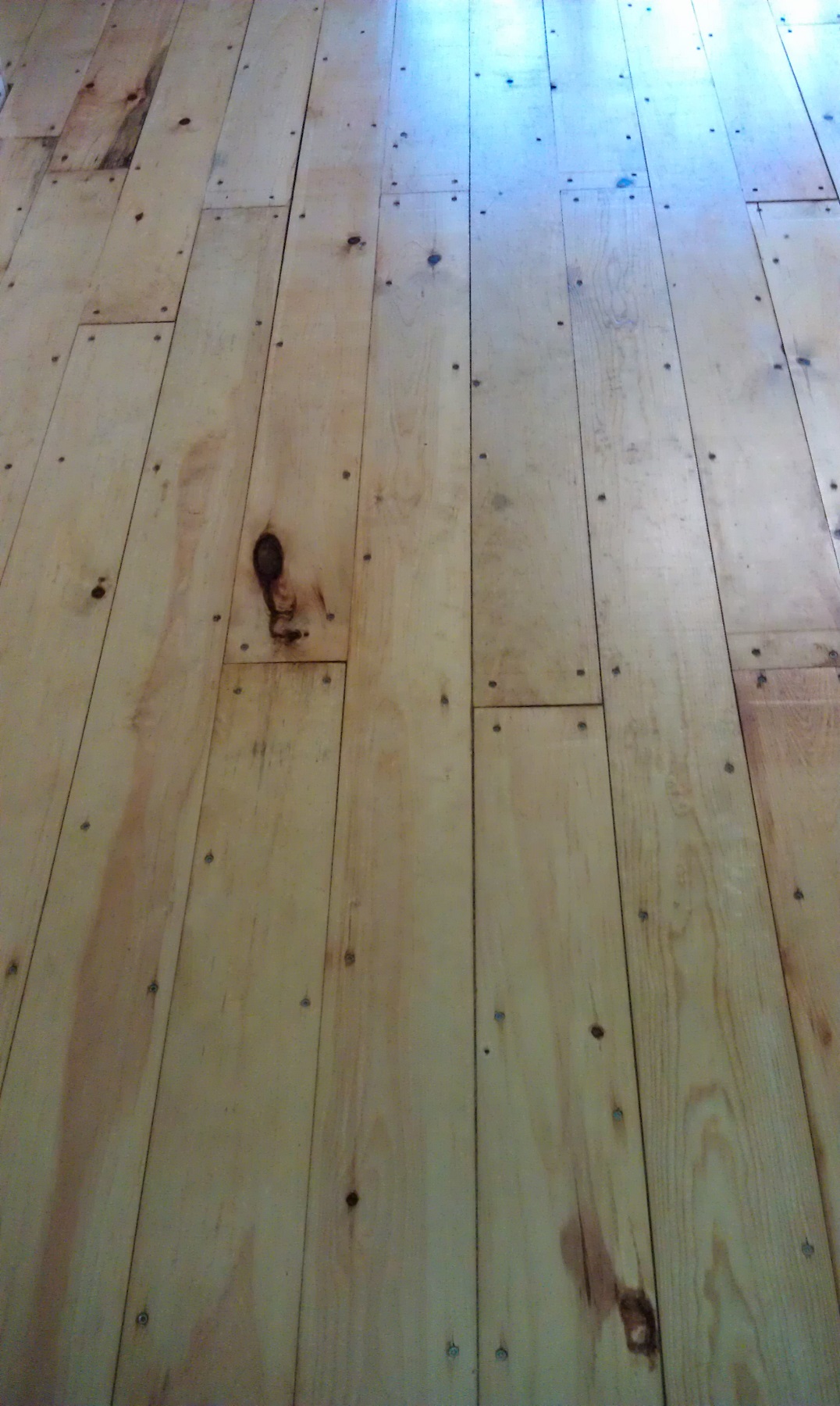
Three families over 22 years along with two large dogs took a toll on the floor boards and they were in sad shape. They are being taken up, the finish sanded off, then run through a planer and put back down, followed by application of two coats of stain and two coats of finish. We decided to go lighter to lighten up the rooms, and because over time, the boards will darken anyway.
Newly finished section of the floor.
It is not possible to move the large Glimakra looms out of the studio, so the floor is being done in sections, and looms and bookshelves being moved as needed.
Another bookcase was moved, temporarily.
My entire weaving library had to be moved out of the studio so this bookcase could be moved, in order to take up floor boards. Whew! What a heavy job that was! I carried them in stacks out to the kitchen, filling the kitchen table and part of the island. It’s a good thing the table is as thick and strong as it is, anything else might have collapsed!
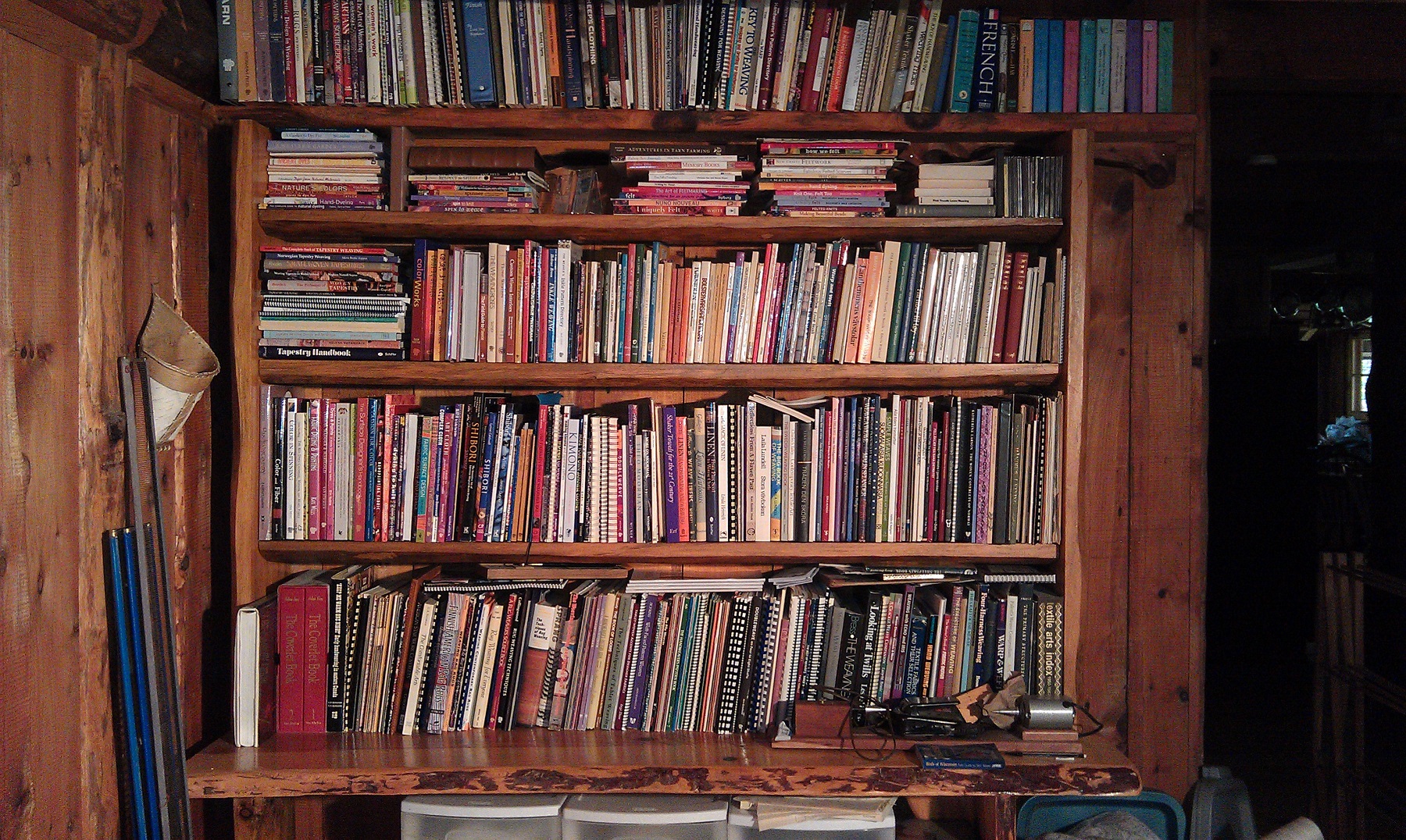
Weaving/fiber library back in place.
Most of the weaving library is now back in place, and organized. Larger notebooks of materials are still packed in boxes, waiting for the other bookcase to be set in its new location.
Wall-washing, too!
Since this half of the studio was emptied, I took the opportunity to wash the walls. Dust accumulates from woodburner, pets, and open windows (pollen and dust). Looking better now! I recall author Helen Hoover writing about washing log walls, and she commented on how the area is increased when washing a “corrugated” surface!
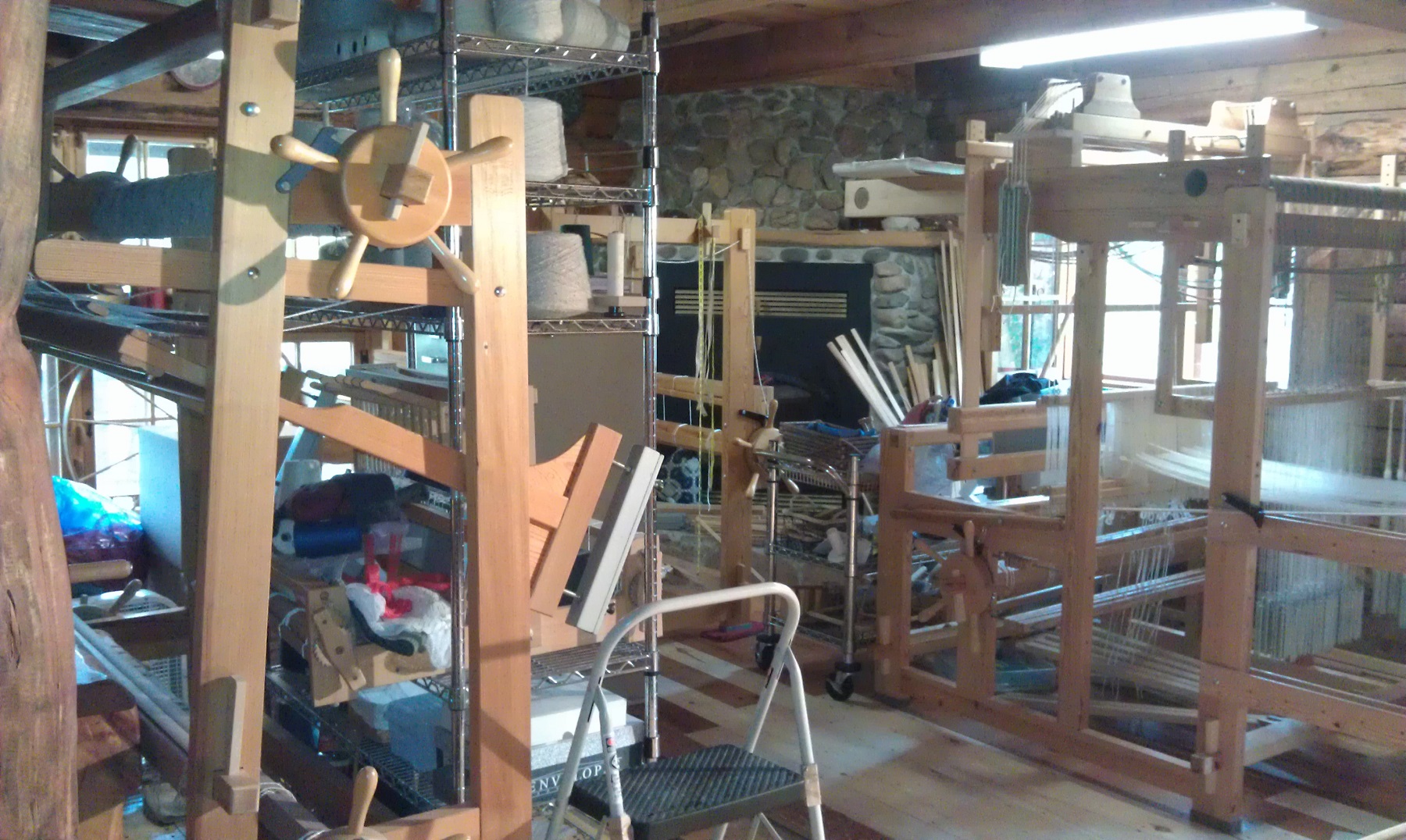
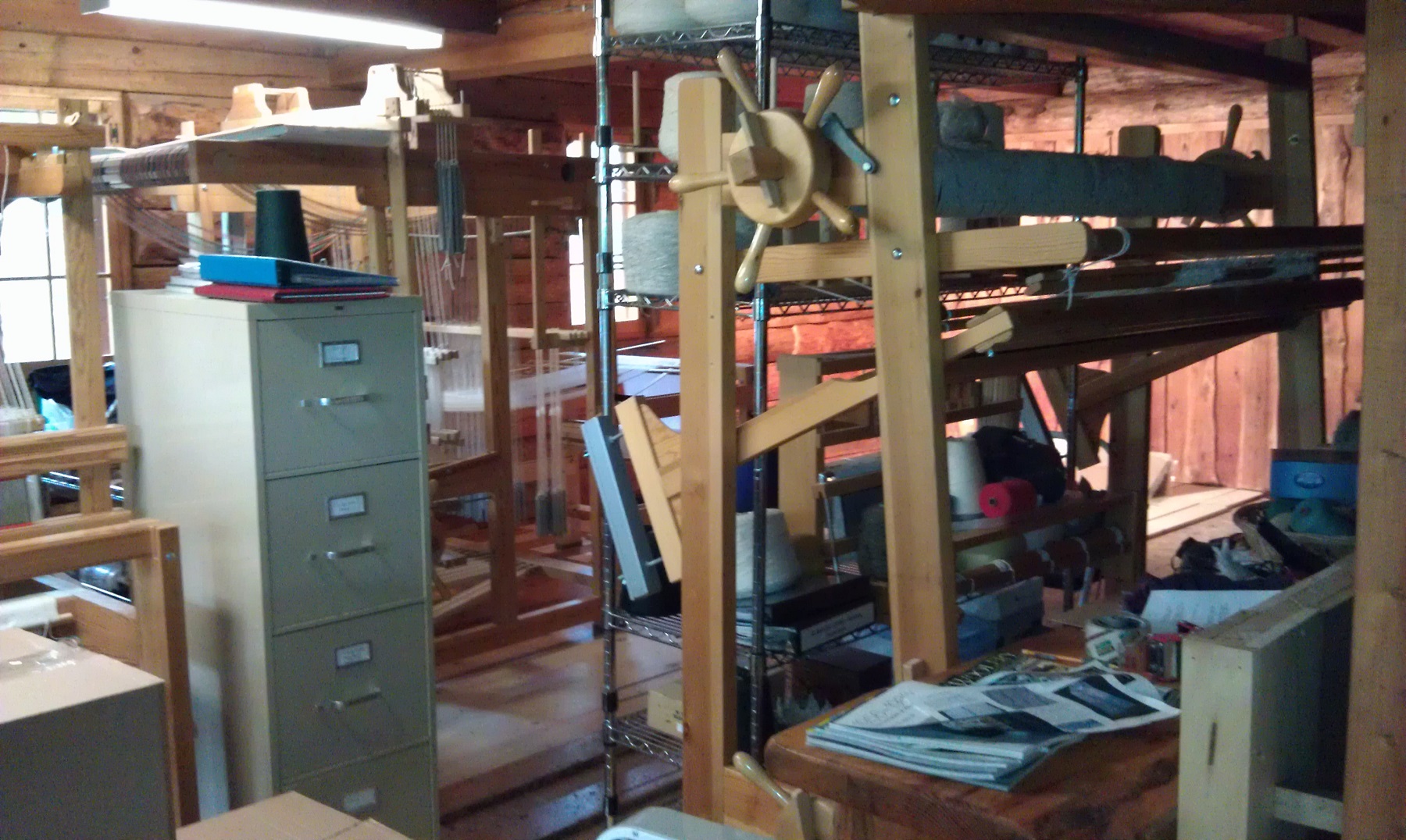
Looms and more pushed to one end of the room.
The Glimakra Regina, Sara tapestry loom (not visible), boxes, bins, file cabinet, and more were pushed into one end of the room so floor boards could be taken up. In a couple days, all this, including the drawloom, must be moved to the area now clear, so the remainder of the floor can be done.
No access to looms at present.
Looms are not accessible this week, and though I’m very happy this work is being accomplished, I’m also a bit frustrated. I’m taking the time to consider a new arrangement of the looms, and of additional lighting that will be installed in a few days.
The Fall Art Tour is coming up fast along with other events and I need to weave! Meanwhile, I can make warps – I made sure the warping mill and tube holder are accessible, and the sock machine is upstairs ready to use.
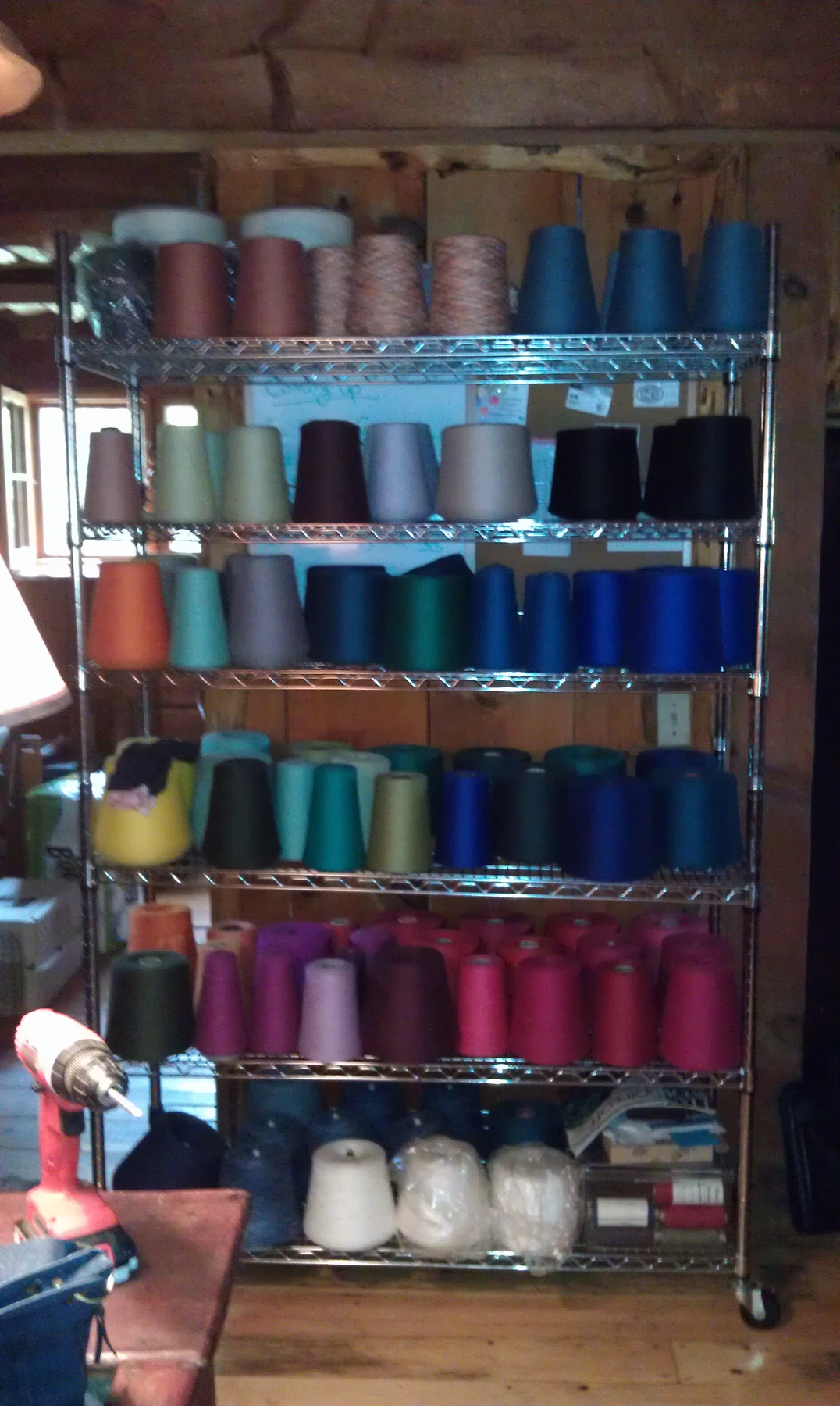
Sock yarns are accessible so I can get some work done.
I also made sure the sock yarns are accessible, and that is what I’ll be working on until I am able to get back to the looms, hopefully by Monday.
Coming up,… October 4th, our guild has a demonstration date and also sale of our weaving and other fiber work, held during CranberryFest weekend in Eagle River, WI.
Oct. 6-12, National Spinning and Weaving Week, and having lost my mind awhile back, signed up to participate in Spinzilla that week. Lost my mind because it is also during,…
Oct. 10-12 – the fall Northwoods Art Tour! If you are in the area, I encourage you to pick up a brochure and go visit some of the area artists studios!
Nov. 15 – Northwoods Artisans Holiday Open Studio, here at Shuttle Works Studio, Heirloom Custom Wood Design, and Celtic Wolf Studio. Weaving, woodworking, and jewelry for sale and visit with the artisans!
I’m looking forward to the new studio layout, meanwhile, I must get back to making socks!
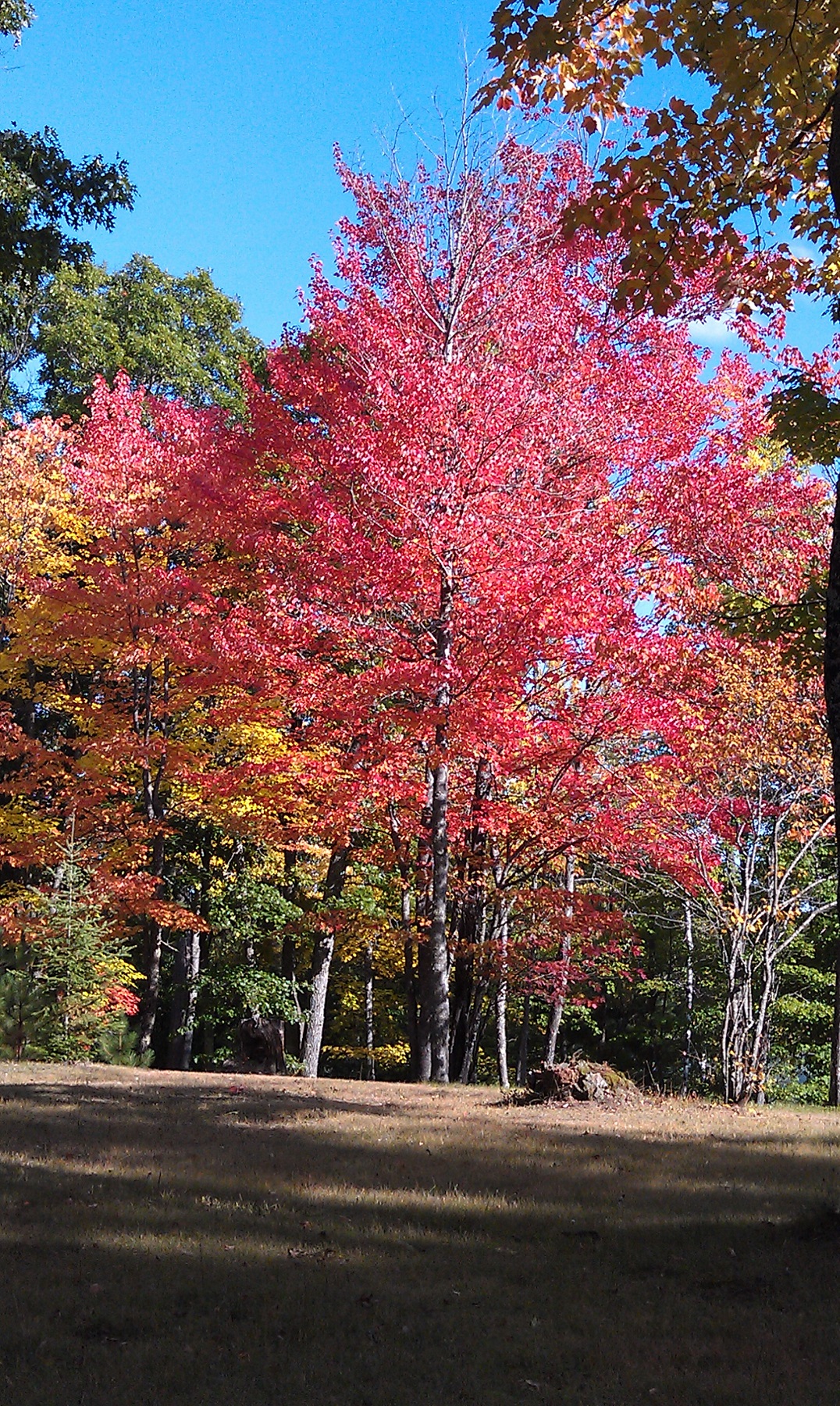
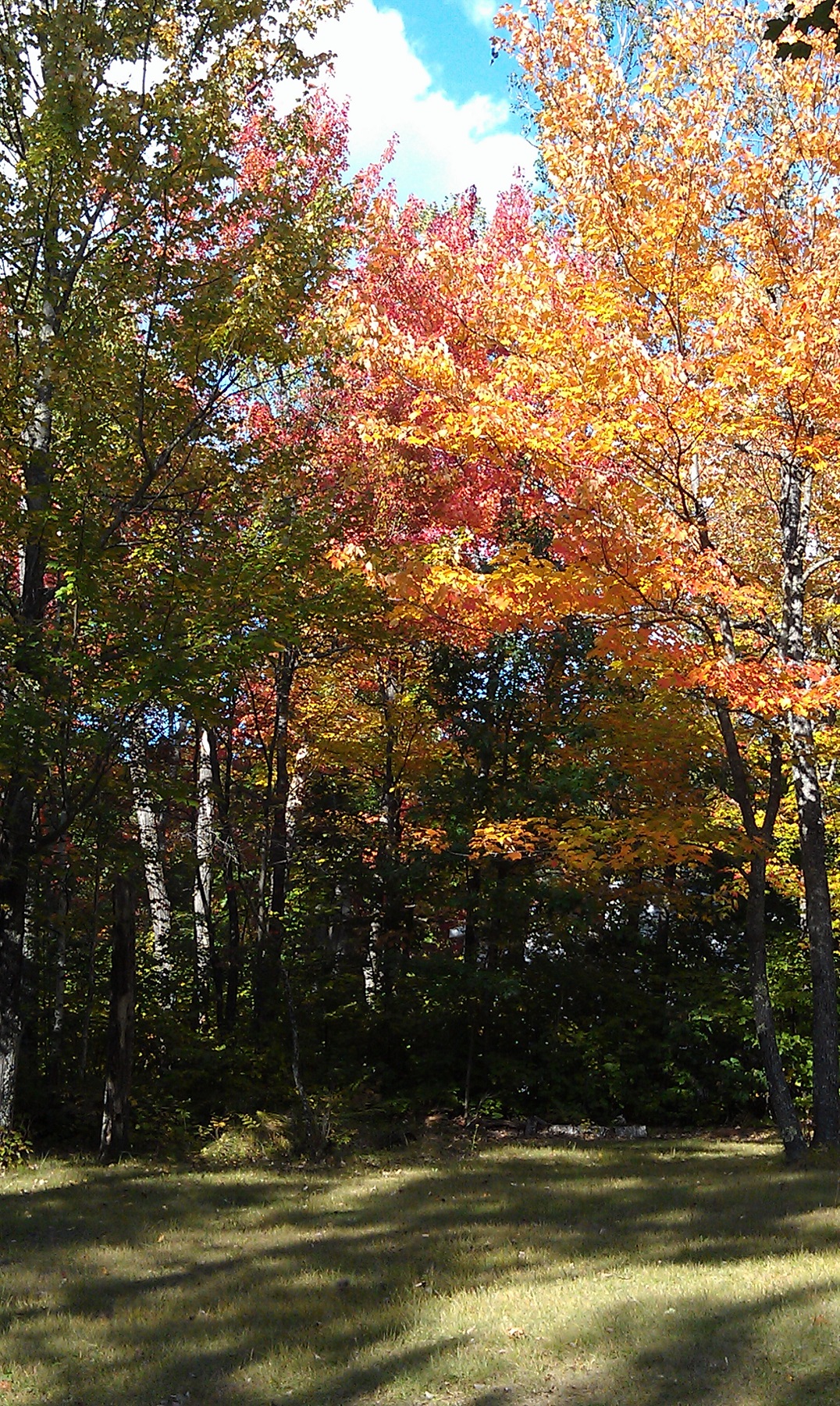
Yesterday was the Autumn Equinox, and the beautiful northwoods of WI now has beautiful color.
Just down the road, on a sunny day.Great color against the pines.
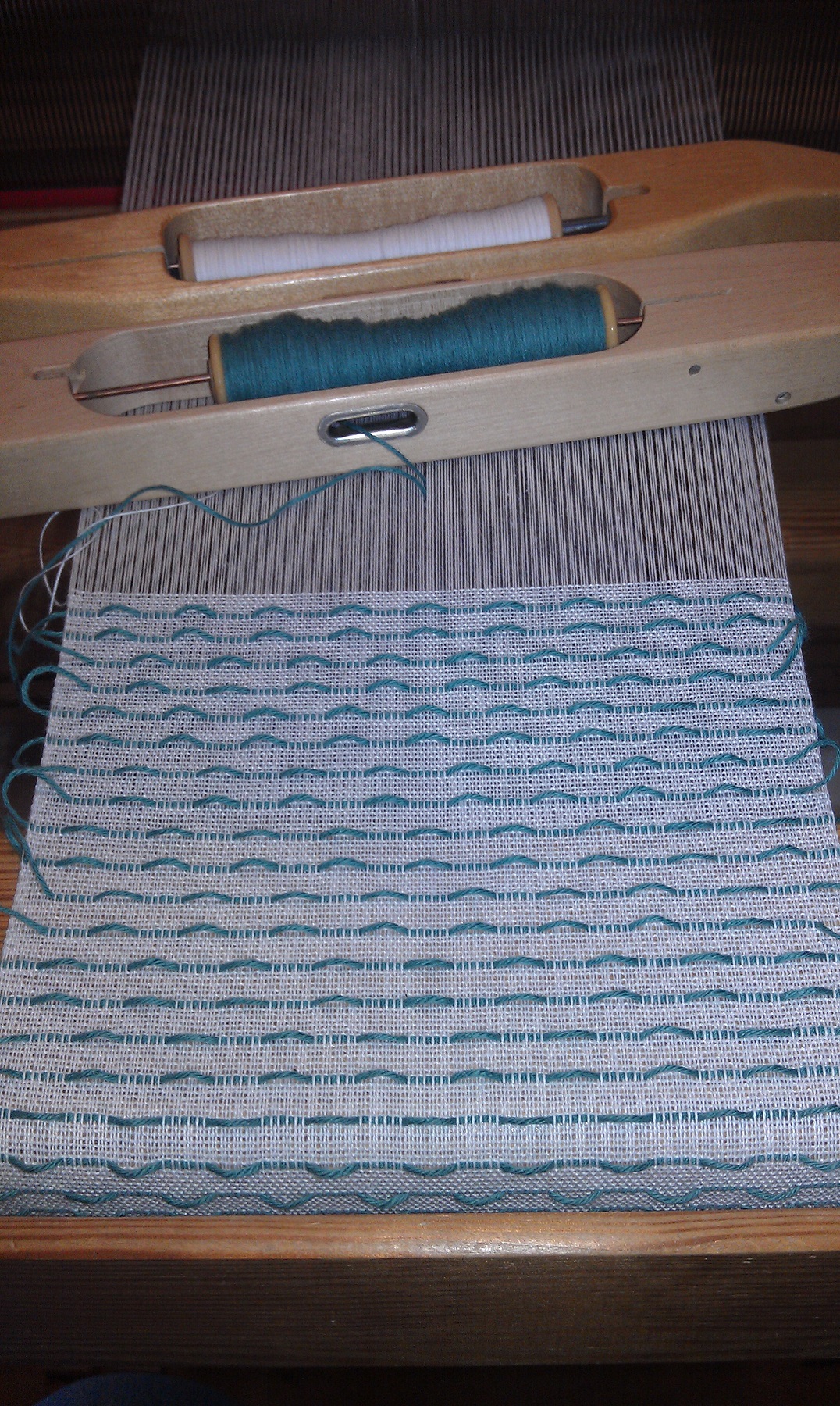
Woven shibori on the loom.
Meanwhile, I continue with woven shibori scarves since all but one were sold during the art tour.
The end of the warp was finally in sight!
It’s always good to see the number of warping sticks go down!
Warp completed, weaving off the loom.
I was hoping for three scarves and another long piece that would, after dyeing, be cut up and used for smaller items. Unfortunately one of the scarves had a one row treadling error which I did not notice until after dyeing. Happily, my daughter wants it and does not mind.
Time to gather and tie.
The next part of the process is to gather and tie, as tightly as possible, the “pattern threads” which are removed after dyeing.
Drying outside.
The pieces were left to dry outdoors for a few hours, then brought inside. They are not opened until dry, or nearly dry if I cannot wait to see the results.
Crinkly when first opened.
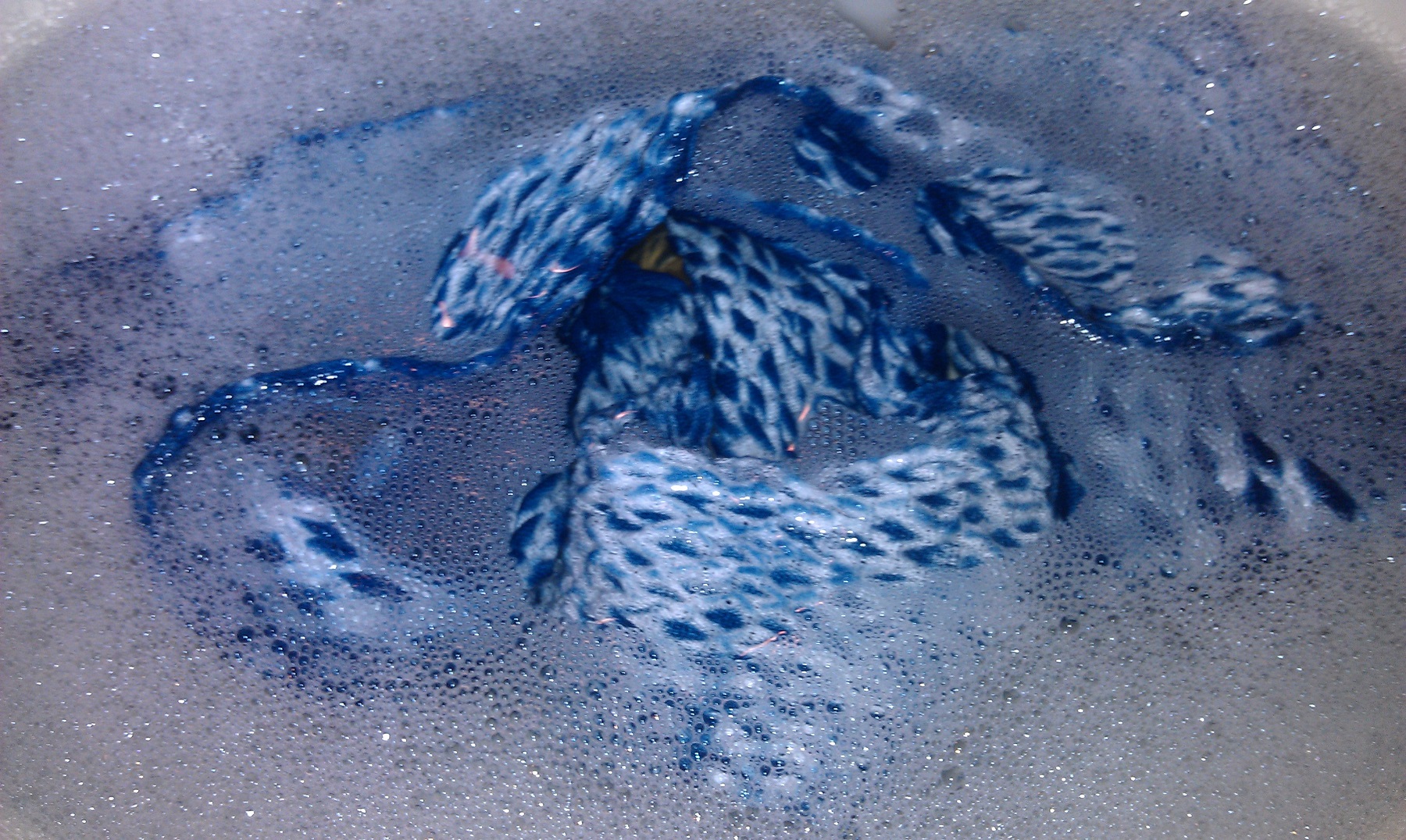
Due to the tight gathers, when first opened the scarves are quite crinkly, reminding me of collapse weave. However, the scarves must be washed and well rinsed to remove any dye not attached.
Finishing begins.
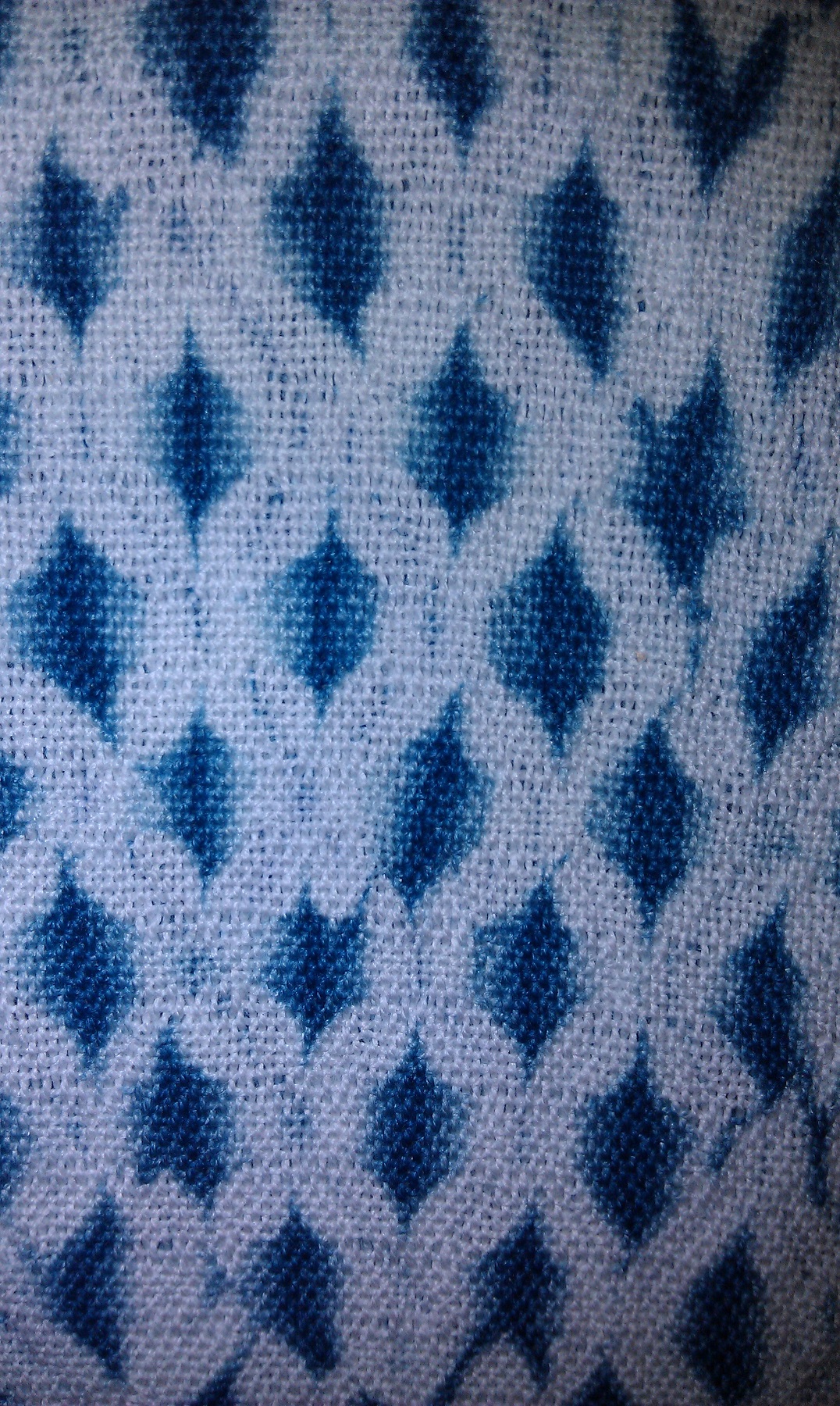
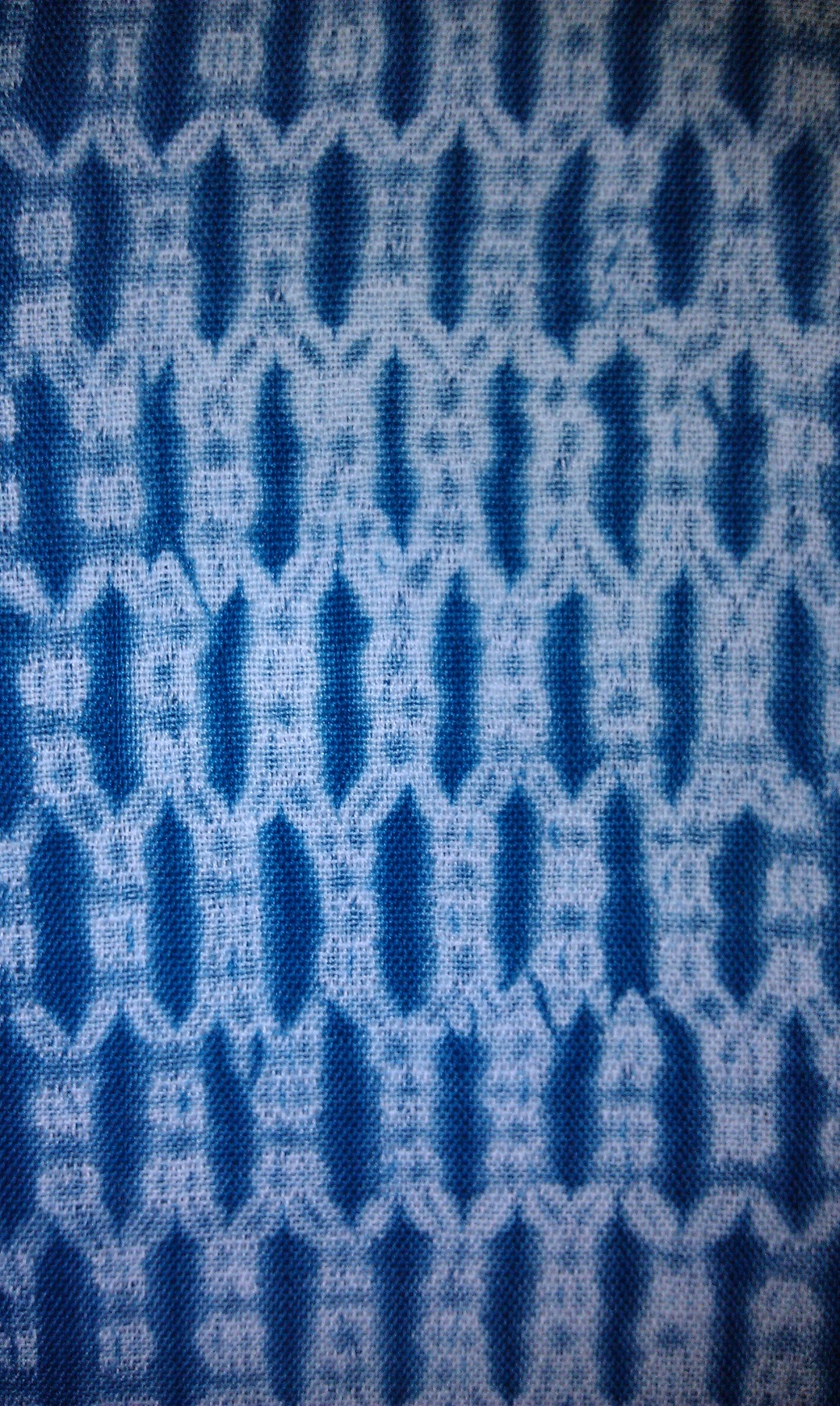
Scarves are hand-washed in a mild soap, then repeatedly rinsed until the water is clear. After air-drying they are pressed and fringe is hand-twisted. The results are,…
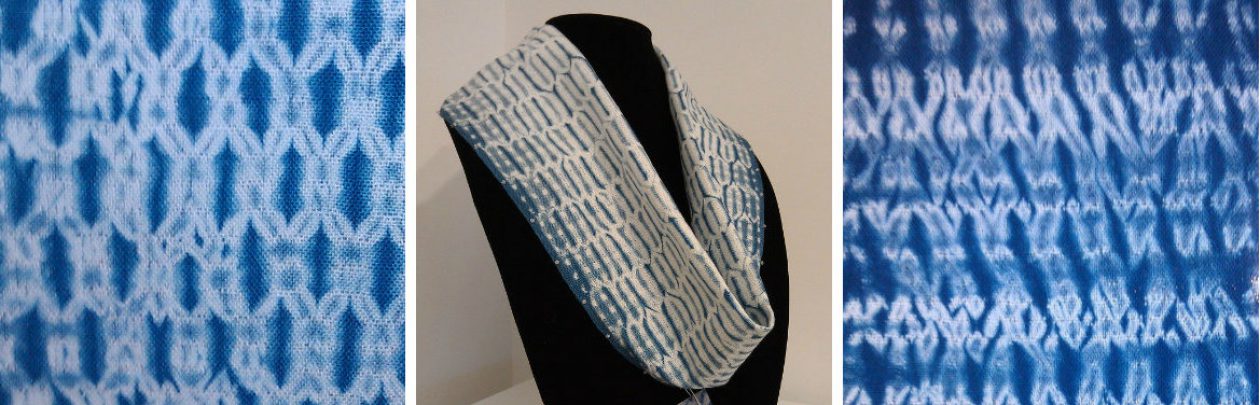









 SHUTTLE WORKS STUDIO