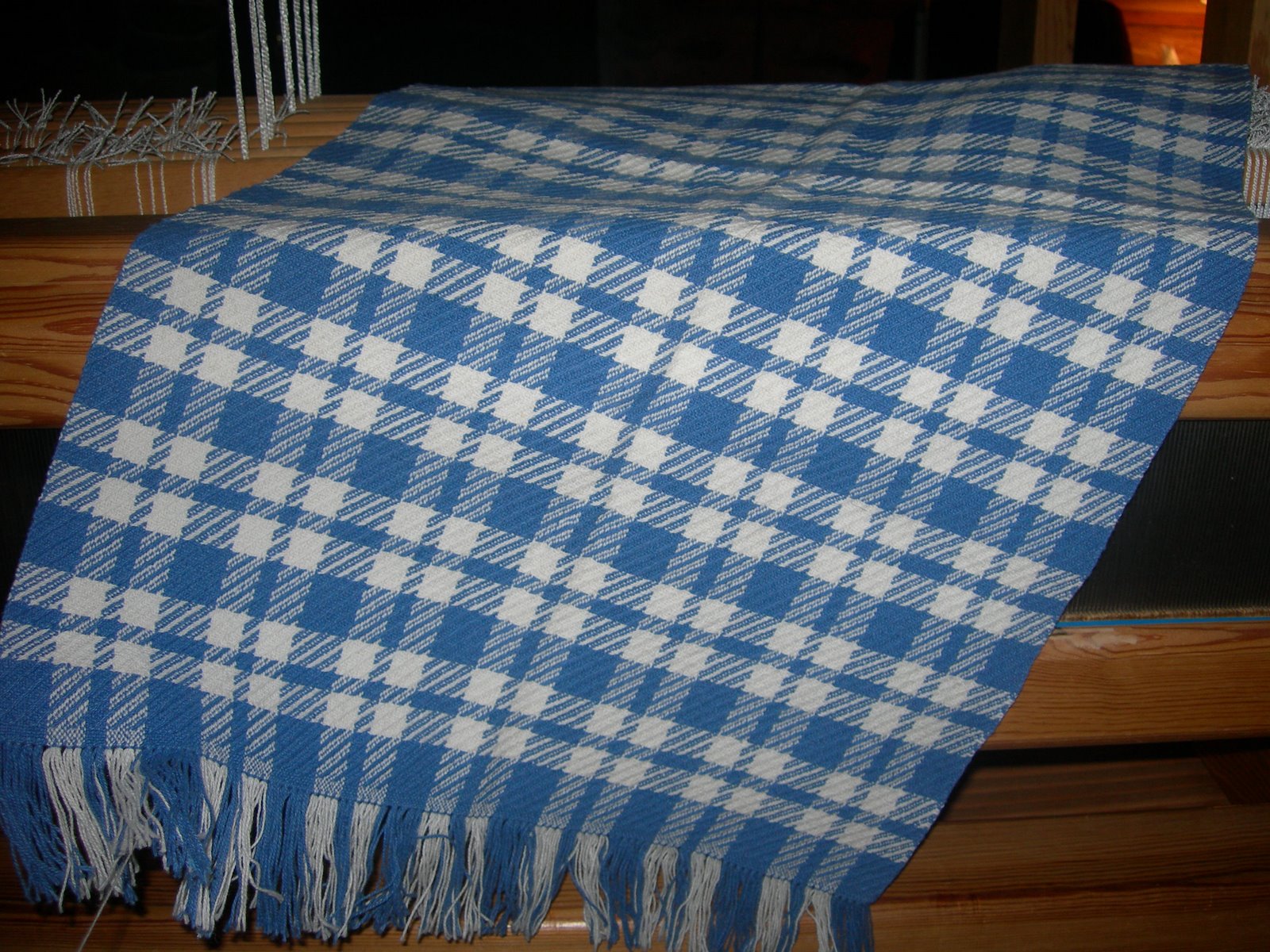
Years ago, I wove a blue and white “plaid” twill towel, with 1/2″ or so of plain weave on each end, and hemstitched on the loom (above). I didn’t recall any issue between the plain weave hems and the twill body of the towel. Both warp and weft were Swedish cottolin.

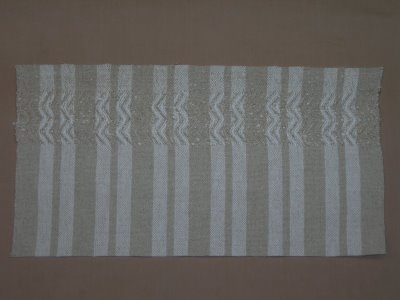
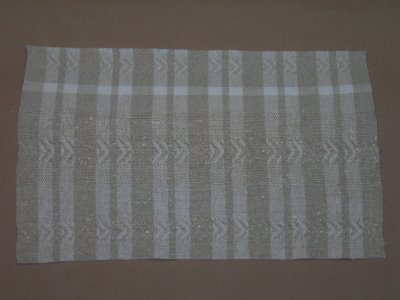
Since I still had the sample (above) from the very beginning of the warp, and both samples had ripples, both were tossed into the washer (regular cycle, warm water) and drier (normal cycle), removing them while still slightly damp. When they came out, the ripples were more pronounced. When pressed with an iron, the ripples pressed out. Selvedges were still a bit of an issue where plain weave and twill changed. Edges were rotary cut, and photos taken.
Tomorrow morning, I will begin again, using a single strand of the linen/cotton slub for both hem and twill, which should alleviate some of the problem. I expect if I weave 1/2″ or so hem and hemstitch on the loom, there would be little or no ripple effect. We’ll see, on this towel, or the next.
 SHUTTLE WORKS STUDIO
Oh no – the plague of ripply hems is spreading!!Sue
Hi Sue,I know a minimal plain weave hem and staying with the same weft helps, my experience has been with cottolin, so exploring now with wefts that are new to me. Will see what the day brings. Oh, it isn’t the hem that ripples, it’s the twill portion! Another new to me weaving experience.
Janice,Ooops – my mistake – I was imagining the hems rippling, not the twill. I love weaving with cottolin too….and didn’t have rippling problems til I was using unmercerized cotton. Hope you find something that works for you!Sue
I’ve recently had trouble with cottolin plain weave hems flaring. Laura Fry gave some great suggestions – see her post http://laurasloom.blogspot.com/2009/01/more-tea-towels.html especially her remarks in the comments.
Thanks for reminding me of Laura’s blog, I read the post and comments and they will give me more to experiment with on the next towels. My results will be posted. Now, over to the loom…